

Why Some People Keep Buying Difficult Cars
Luxury is oft described as the removal of inconvenience. The finest hotels anticipate your needs before you voice them. The finest restaurants ensure that nothing interrupts the experience. The finest automobiles isolate occupants from noise, vibration, weather, and fatigue. For most of the twentieth century, technological progress and luxury moved in the same direction: toward greater ease.
Today that process is nearly complete.
Modern luxury cars are extraordinary achievements. They can guide themselves through traffic, maintain perfect following distances, smooth rough pavement, filter unwanted noise and malodorous street side musk. Indeed these marvels of modern motoring surround their occupants with carefully curated comfort. Increasingly, the role of technology is not simply to assist the driver but to remove the necessity of driving altogether. The automobile, once a machine that demanded attention and skill, is steadily becoming another seamless consumer experience.
And yet something curious has happened along the way.
Many of the people most capable of purchasing these frictionless machines seem increasingly attracted to their opposite. They spend significant sums acquiring cars with manual transmissions. They celebrate engines that make noise. They seek steering systems that communicate road imperfections rather than conceal them. They tolerate firm suspensions, imperfect ergonomics, and mechanical quirks that engineers have spent decades trying to eliminate.
On the surface, this appears irrational. Why pay more for a product that asks more of its owner?
The answer may be that friction itself has become a luxury.
The modern world is remarkably efficient at removing resistance from daily life. Food arrives with a swipe of a finger. Entertainment appears instantly. Navigation systems eliminate uncertainty. Algorithms anticipate preferences before they are consciously formed. We increasingly inhabit an environment designed to reduce effort, minimize waiting, and smooth every rough edge of experience.
This is, by almost every objective measure, a triumph. Yet there is a subtle consequence to a world optimized for convenience. Experiences begin to lose texture. When nothing pushes back, nothing feels particularly substantial. The absence of friction creates comfort, but it can also create distance. In psychological terms, resistance is a necessary part of the equation because it gives feedback about tangible conditions in the environment and subtle change. Resistance provides a measure of predictability.
Human beings seem to require some degree of resistance to feel fully engaged. We value accomplishments that are difficult. We treasure skills that require practice. We become attached to objects that ask something of us in return. The satisfaction derived from these things does not emerge despite their difficulty. It emerges because of it.
This pattern appears throughout modern luxury culture. Mechanical watches survive in a world of perfectly accurate smartphones. Vinyl records persist despite the existence of lossless digital streaming. Enthusiasts continue to buy fountain pens, film cameras, and handcrafted leather goods even when objectively more efficient alternatives exist. The appeal is not technological superiority. It is participation.
A mechanical watch reminds its owner that tiny gears and springs are continuously at work. A fountain pen asks its user to slow down. A film camera introduces uncertainty and intention into the act of taking a photograph. In each case, the experience becomes more meaningful precisely because it requires involvement.
The same principle explains the enduring appeal of enthusiast automobiles.
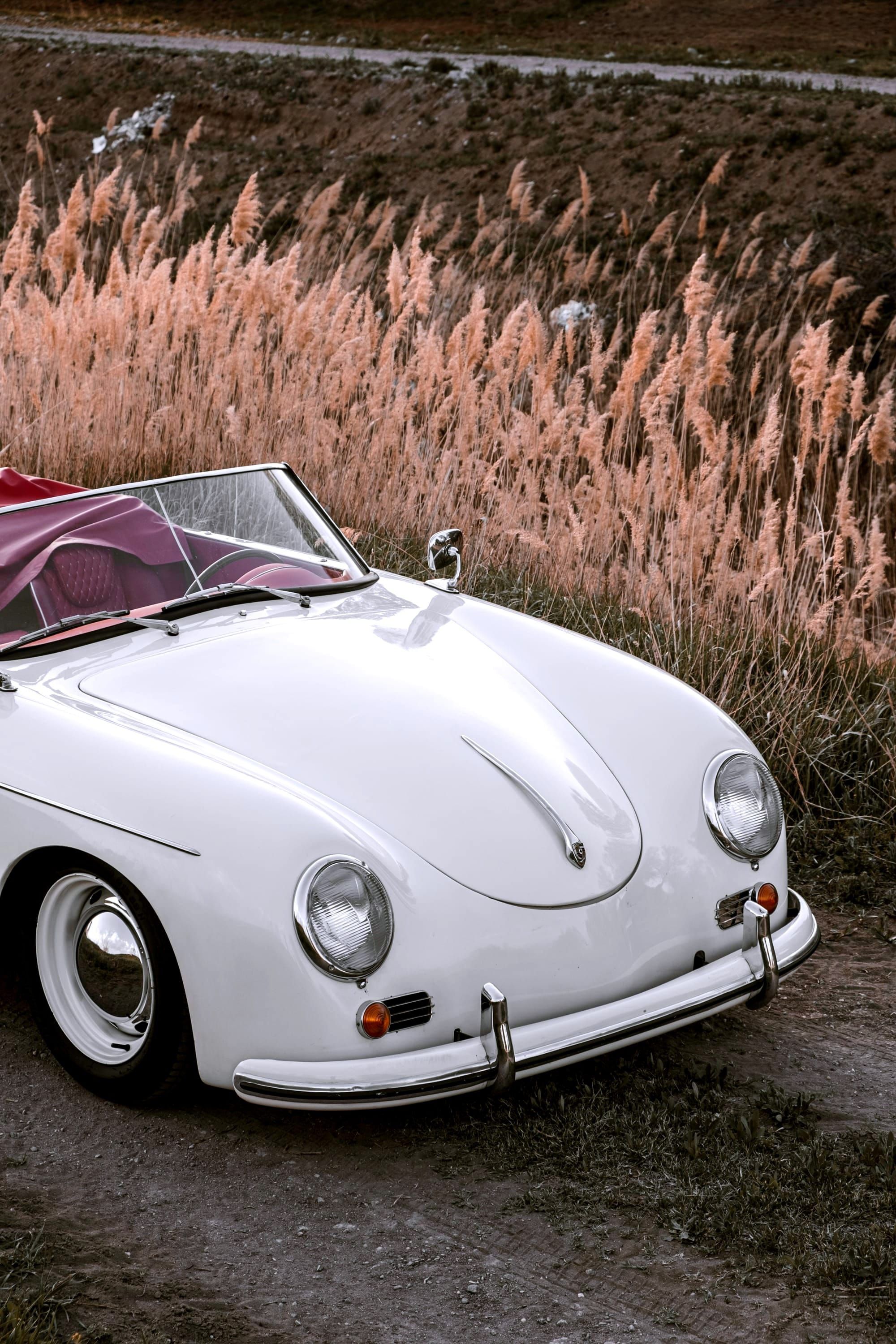
Consider an older Porsche. The steering loads progressively as a corner tightens. The gearbox rewards precision and punishes carelessness. The engine communicates through sound and vibration. The brake pedal requires deliberate pressure. Every input matters. Every action produces a response that feels direct, mechanical, and honest.
None of these characteristics make the car objectively superior to a modern equivalent. In fact, contemporary engineering can improve nearly every measurable performance metric. Newer cars are faster, safer, quieter, and more capable. Yet many enthusiasts find themselves drawn not to the superior machine but to the more demanding one.
The reason is simple. Difficulty creates engagement.
When a car requires skill, attention, and participation, the driver becomes part of the experience rather than merely its beneficiary. The machine cannot disappear into the background because its operation depends on human involvement. The result is a level of presence that has become increasingly uncommon in modern life.
This may also explain why analog enthusiast cars have become objects of extraordinary desire. Collectors are not merely purchasing horsepower or lap times. They are purchasing a type of experience that is steadily disappearing. Mechanical feedback. Physical involvement. Concentration. Responsibility. These qualities cannot be replicated through software updates or digital interfaces because they arise from the very limitations modern technology seeks to overcome.
There is another dimension to this attraction. Analog machines offer clarity. In an increasingly digital world, many systems operate invisibly. Algorithms make decisions we do not fully understand. Software performs functions hidden beneath layers of abstraction. Cause and effect become difficult to observe.
A sports car remains refreshingly transparent. Press the throttle and the engine responds. Turn the wheel and the chassis reacts. Make a mistake and the consequences are immediate. There is comfort in this honesty. The relationship between action and outcome remains intact.
Perhaps this is why certain Porsches occupy such a unique place in automotive culture. Whether air-cooled classics, manual GT cars, or the increasingly rare naturally aspirated sports car, they offer something beyond transportation. They preserve a form of engagement that many aspects of modern life have quietly abandoned.
The irony is difficult to miss. The wealthiest enthusiasts often spend substantial sums pursuing experiences that are, by conventional standards, less convenient. They seek cars that require concentration. Cars that demand skill. Cars that occasionally frustrate. Cars that refuse to disappear beneath them.
In nearly every other category, luxury means removing effort. In the best enthusiast cars, luxury means preserving it.
Perhaps that is why the manual transmission survives. Perhaps that is what draws grizzled mariners to lean into their sextant when GPS would be infinitely more precise. Perhaps that is why an older Porsche can feel more valuable than a newer, objectively superior machine. There is meaning in process and convenience strips of that meaning.
Because convenience is now abundant.
Friction is rare.
And rarity, as every collector understands, is where value begins.
Zündung links.